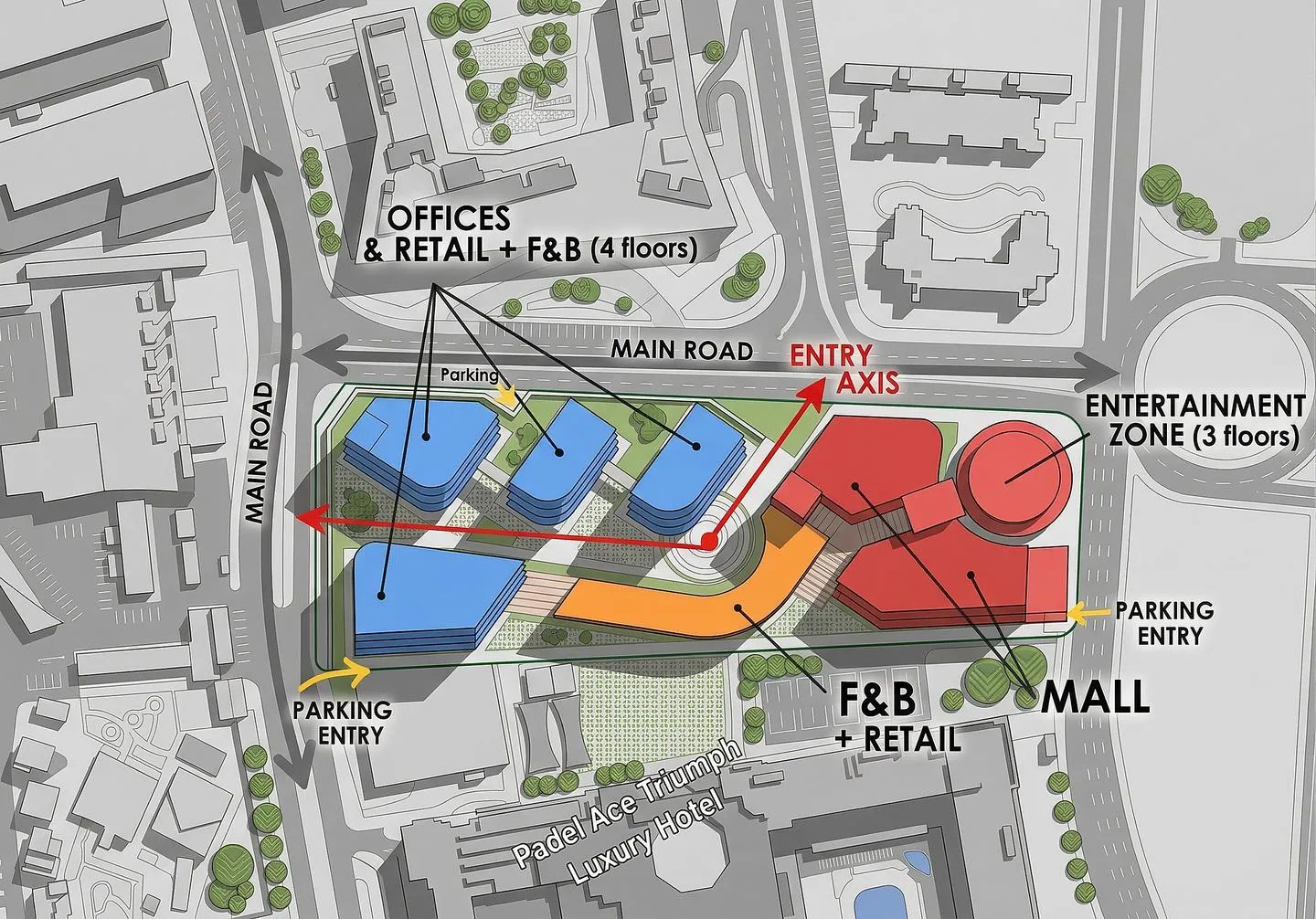
One of the most important skills in architecture is knowing when to develop an idea and when to leave it flexible. In the earliest stages of a project, architects may be considering several possible approaches at the same time. The entrance could face one direction or another. A facade might be solid and deeply recessed or lighter and more transparent. An outdoor area could become a courtyard, garden or extension of the public realm.
Traditionally, exploring each alternative visually could require considerable modelling and rendering work. Today, AI rendering for architects provides another way to study early concepts without immediately developing every option to the same level of detail. The benefit is not simply faster image production. Used carefully, faster visual feedback can help architects identify which ideas are worth developing further and which should be reconsidered before too much time is invested.
Early Architecture Should Remain Flexible
Concept design is not supposed to look finished.At this stage, architects are testing relationships between programme, site, movement, orientation, scale and form. A simple diagram or massing model may be more valuable than a complicated digital model because it is easier to modify.
Problems can arise when teams develop one option too deeply before comparing alternatives.
Once significant time has been spent modelling a proposal, there is a natural tendency to protect that investment. A team may continue refining a weak idea because abandoning it feels wasteful.
Maintaining lighter design information for longer can prevent this. The objective is to develop enough information to evaluate an idea without creating unnecessary commitment.
Visual Feedback Can Expose Hidden Problems
Plans and diagrams are excellent at communicating organisation, but they do not always reveal how architecture will be experienced. A courtyard that appears generous on plan may feel narrow when seen from eye level. An entrance that looks clearly positioned in elevation may disappear when viewed from the actual approach. A large roof overhang may appear elegant in section but visually dominate the facade. Perspective studies can expose these issues.
They provide another form of design evidence. The architect can then return to plans, sections and models with a clearer understanding of what needs adjustment.
This is why visualisation can become useful during design rather than only after the design is completed.
Ask One Question at a Time
When rapid image generation becomes available, there is a temptation to explore everything simultaneously.
That can produce attractive images but poor architectural analysis.
A better approach is to define a question first.
For example:
- Should the entrance be visually recessed or projected?
- Does a darker facade material make the building appear too heavy?
- Would additional landscaping improve the relationship with the street?
- Should the upper floors step back more noticeably?
- Is the courtyard better with a formal or natural landscape character?
Once the question is clear, the visual study can be constructed around it.
This creates controlled comparison rather than random variation.
Concept Generation Should Have Architectural Direction
An AI architecture generator can help explore architectural concepts from descriptions or early sketches, but the quality of the process still depends on the direction provided by the designer. Simply asking for a “modern office building” may produce visually interesting results, but it does not address the actual project.
A stronger prompt or starting sketch might include information about the site, building type, climate, desired relationship with the street, material character and important spatial features. The goal should not be to ask technology to invent the project independently. Instead, the architect supplies the intention and uses generated studies to examine possible expressions of that intention.
This keeps architectural thinking at the centre of the process.
Use Sketches to Preserve Individual Ideas
Hand sketches remain particularly useful because they contain the architect’s own spatial decisions.
Even a loose drawing communicates composition, proportion and hierarchy.
A sketch can indicate where an entrance should be, how one volume overlaps another or how a roof line relates to the surrounding landscape.
Using that drawing as the basis for a visual study can preserve more of the original concept than starting entirely from a generic text description.
It also allows architects to continue using a familiar design method.
The process does not need to become “traditional drawing versus AI”. The two can support each other.
An architect may sketch first, visualise the sketch, identify a problem, draw over the result and repeat the cycle.
Compare Options Under Similar Conditions
Comparison works best when the conditions remain consistent.
If Option A is shown on a bright summer afternoon while Option B appears during dramatic sunset lighting, viewers may respond to atmosphere rather than architecture.
The same is true of camera angles.
A low-angle perspective can make one scheme appear more monumental than another even when their actual dimensions are similar.
For meaningful comparison, teams should try to maintain:
- similar viewpoints;
- similar weather and daylight;
- comparable surrounding context;
- consistent image proportions;
- the same basic project geometry where appropriate.
Variables can then be changed deliberately.
This makes client and internal feedback much easier to interpret.
Client Discussions Become More Specific
One of the practical benefits of concept visualisation is that clients often respond more confidently to images than to abstract architectural descriptions.
A client may struggle to answer whether a building should have “greater facade articulation”.
Show two alternatives and the discussion becomes much clearer.
They may prefer deeper window reveals because the building feels more substantial. They may respond positively to a warmer material because it relates better to nearby architecture.
This does not mean the client should make every architectural decision.
The architect still needs to interpret feedback.
Sometimes a client’s comment about colour is actually a response to scale. A request for larger windows may reflect a desire for a lighter atmosphere rather than a literal glazing requirement.
Visualisation helps uncover these reactions, but professional judgement remains essential when translating them into design decisions.
Do Not Confuse Attractive Images With Strong Concepts
Generative visualisation can make almost any basic idea look impressive.
Atmospheric lighting, detailed vegetation and sophisticated materials can give weak architecture an appearance of quality.
Designers need to resist this visual seduction.
A useful review technique is to remove the atmosphere mentally and return to the architectural fundamentals.
Does the plan work?
Is circulation clear?
Does the building respond appropriately to its site?
Are proportions convincing?
Does the massing support the concept?
Would the design still make sense if shown as a simple line drawing?
If the answer is no, additional visual polish is unlikely to solve the real problem.
Keep Generated Details Under Review
Early AI-generated imagery may introduce features that were never part of the original design.
A facade might gain extra windows. A balcony could appear unexpectedly. Landscaping may change circulation. Roof geometry may become more complicated.
Sometimes these accidental additions can inspire a useful idea.
However, they should never enter the project automatically.
The architect must decide whether the change genuinely improves the design.
If it does, the underlying model and drawings should be deliberately updated.
If it does not, the generated image should be corrected or rejected.
This keeps the actual architectural documentation and the visual representation aligned.
Remember That Concept Images Are Not Technical Documents
Realistic images can create the impression that the architecture has been fully resolved.
That impression needs to be managed carefully.
An early visual does not demonstrate structural feasibility, drainage, waterproofing, accessibility, fire performance or compliance with planning and building regulations.
It may also contain materials or construction details that have not been technically investigated.
For this reason, concept studies should be identified clearly during presentations.
Professional development still needs to follow.
Context Is Part of the Concept
Architecture should not be evaluated against an empty background.
A building’s relationship with neighbouring structures, vegetation, streets and public spaces affects the success of the proposal.
Concept visualisation can help test these relationships early.
A new building may appear appropriately scaled in isolation but oversized when shown beside existing houses.
A courtyard may seem attractive until surrounding buildings reveal how much shade it could receive.
An entrance may need stronger architectural emphasis once pedestrian approach routes are represented.
Context therefore provides information rather than decoration.
More Options Do Not Always Mean Better Decisions
The ability to generate variations quickly can create another problem: too much choice.
If a project team produces dozens of facade alternatives, discussions may become superficial.
Participants begin choosing favourites rather than evaluating architectural reasoning.
The solution is curation.
Architects should generate enough options to test a hypothesis and then remove the ones that do not contribute meaningfully.
A presentation containing three clearly differentiated alternatives often creates a better discussion than one containing twenty slightly different images.
Technology can increase the speed of exploration, but designers still need to control the decision-making process.
Move the Best Idea Back Into the Real Project
Visual exploration only creates value when what is learned is transferred back into architectural development.
If a particular facade study improves the building, its principles should be incorporated into the model.
If an alternative landscape arrangement strengthens the entrance, that relationship should be developed with appropriate landscape information.
If an interior study reveals that the ceiling is too low visually, the design team should investigate whether geometry, lighting or material treatment needs adjustment.
The generated image is therefore not the final destination.
It is part of a feedback loop:
idea, visualise, evaluate, revise and develop.
That cycle is where rapid visualisation becomes genuinely useful to architecture.
Conclusion
Architectural concept design benefits from uncertainty. The early stages of a project should allow ideas to compete before one direction receives the majority of the team’s time and resources.
Rapid visualisation can make that process more informed.
Architects can compare facade strategies, examine scale, communicate proposals more clearly to clients and identify spatial problems before detailed documentation begins. However, the value comes from disciplined use rather than the number of images generated.
Every study should answer a design question. Generated details should be reviewed critically. Context should be represented honestly, and realistic imagery should never be mistaken for technical resolution.
The architect’s role remains the same: understand the problem, develop an appropriate response and decide which ideas deserve further development.
Technology can make alternatives visible more quickly. Architectural judgement determines which of those alternatives is worth building.