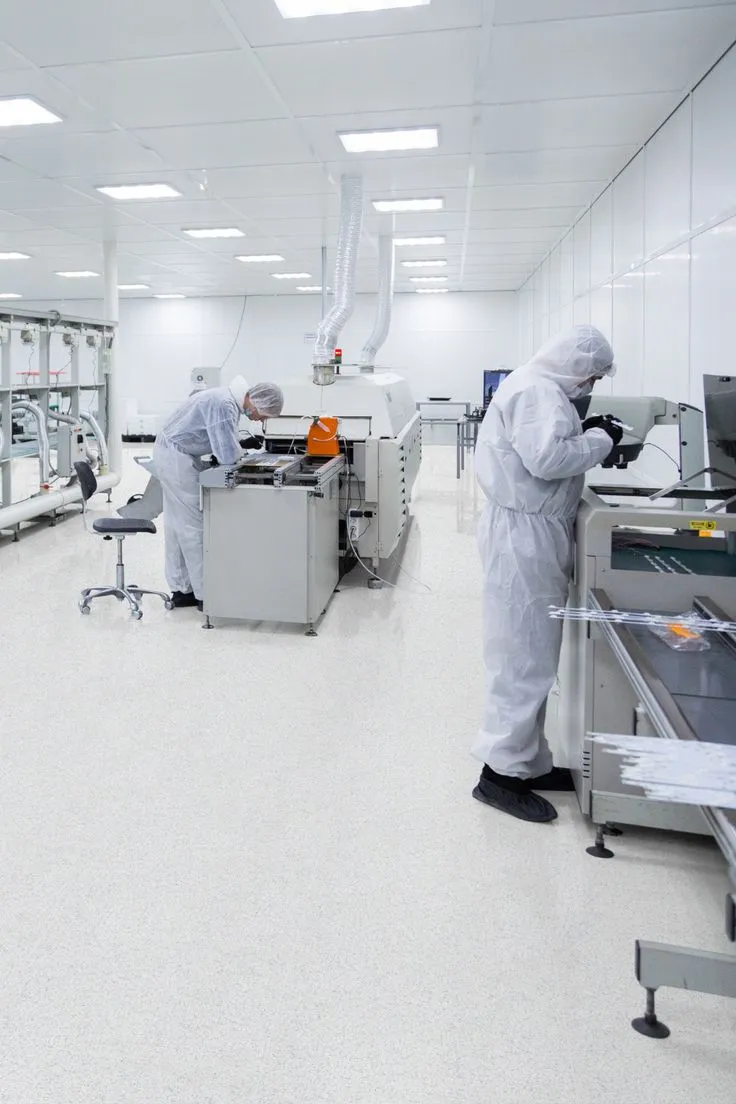
Laboratory flooring has to do more than survive foot traffic. Research spaces may contain sensitive electronics, calibration equipment, automated instruments, solvents, disinfectants, rolling carts, and frequent cleaning routines. In some facilities, electrostatic discharge is another design concern that needs to be addressed before the floor system is specified. Static-control performance cannot simply be added as a decorative feature at the end of a renovation. It depends on the flooring system, grounding strategy, room function, maintenance practices, and the equipment operating above the surface.
Start With the Equipment Risk
Not every laboratory needs electrostatic dissipative flooring. The requirement depends on what happens in the room and how sensitive the equipment or processes are to static electricity.
Electronic testing areas, computerized instrumentation rooms, certain cleanrooms, and spaces handling static-sensitive components may need greater control than general wet labs or administrative corridors. Facility teams should therefore involve laboratory managers, equipment specialists, and safety personnel before selecting a flooring specification.
Defining the risk first prevents a specialized system from being installed where it is unnecessary or omitted where it serves an important operational purpose.
Static Control Is a System
ESD performance depends on more than the visible top layer. Conductive or dissipative resinous flooring is designed as part of a wider system that can include primers, conductive components, grounding points, and compatible footwear or operational procedures.
A facility researching Industrial Epoxy Flooring Contractor In Nj should ask how static-control requirements will be verified and incorporated into the complete flooring build. The contractor should understand the intended room use rather than simply supplying a standard industrial coating with a different label.
Grounding Should Be Planned Early
Grounding details are much easier to coordinate before the floor is installed. Electrical teams may need to identify suitable grounding locations, while the flooring contractor needs to know how those connections fit into the resinous system.
Waiting until the final coat is applied can create avoidable rework. Grounding points, room boundaries, equipment positions, and future modifications should therefore be discussed during design.
Documentation is also useful so maintenance teams know where grounding components are located after the laboratory returns to service.
Chemical Resistance Still Matters
Static control does not replace the other performance requirements of a laboratory floor. Acids, solvents, reagents, disinfectants, and cleaning products may still reach the surface.
The resin chemistry should therefore be selected for both the ESD requirement and realistic chemical exposure. Facilities should provide contractors with information about substances used routinely, spill frequency, and sanitation procedures.
A technically suitable static-control system is only practical if it can also tolerate the environment in which it operates.
Seamless Surfaces Support Cleaning
Laboratories often prefer surfaces with fewer joints and seams because they are easier to clean consistently. Resinous flooring can create a continuous finish across broad areas and can be combined with cove-base details where a smoother floor-to-wall transition is useful.
Facility teams comparing Hpsfloors with other commercial flooring providers should evaluate how the proposed system addresses cleaning, chemical exposure, substrate preparation, and static-control requirements together.
No single feature should be considered independently from the rest of the laboratory workflow.
Substrate Preparation Remains Essential
Specialized flooring still depends on sound concrete. Old coatings, weak surface material, cracks, contamination, and moisture conditions can affect adhesion.
Mechanical preparation such as diamond grinding or shot blasting may be used to create the required concrete surface profile. Repairs and moisture-mitigation measures can then be incorporated where needed before the resinous system is installed.
This stage is particularly important because an ESD floor can only perform reliably when the overall installation remains intact.
Maintenance Can Affect Performance
Laboratory maintenance procedures should be reviewed after installation. Cleaning products, waxes, or other treatments may affect the surface characteristics of some static-control systems.
Staff should receive clear guidance on approved cleaning methods and any testing or inspection requirements. If the room is reconfigured or new equipment is installed, the flooring and grounding strategy may also need to be reassessed.
Treating ESD performance as an ongoing operational requirement is more useful than viewing it as a one-time installation feature.
Conclusion
Static-control flooring should be specified only after the laboratory’s equipment, processes, chemical exposure, cleaning routines, and grounding needs are understood. In the right environment, an ESD resinous system can become an important part of protecting sensitive operations, but its effectiveness depends on coordinated design rather than the finish alone.
Planning the requirement early allows facility teams to integrate grounding, substrate preparation, resin chemistry, cleaning, and room layout into one system. That approach creates a laboratory floor designed around actual technical needs instead of adding static-control features after the rest of the project has already been decided.
