Effective financial planning is essential for maintaining stability and achieving long-term financial goals. One of the most important aspects of financial planning is budgeting, which involves organizing income and expenses to ensure that money is used wisely. A well-structured budget helps individuals understand where their money goes, control unnecessary spending, and prioritize savings. In today’s fast-paced economic environment, many people face financial challenges due to rising living costs, debt obligations, and unexpected expenses. By applying practical budgeting techniques, individuals can build stronger financial habits and improve their financial security. Budgeting also allows people to plan for future goals such as buying a home, funding education, or preparing for retirement. With the right strategies and discipline, budgeting becomes a powerful tool for achieving financial stability and long-term prosperity.
Understanding the Importance of Budgeting
Budgeting serves as the foundation of effective financial management. It allows individuals to gain a clear understanding of their financial situation by tracking income and expenses. When people know how much money they earn and where it is being spent, they can make informed financial decisions and avoid unnecessary debt.
A well-planned budget also helps individuals prioritize essential expenses such as housing, food, transportation, and healthcare. By allocating funds carefully, people can ensure that their basic needs are met while still saving money for future goals. Budgeting also encourages financial discipline, helping individuals develop responsible spending habits over time.
In addition, budgeting prepares individuals for unexpected financial situations. Emergencies such as medical expenses or sudden job loss can create financial stress if there is no financial plan in place. With a structured budget, individuals can set aside emergency funds and reduce the impact of unforeseen expenses.
The 50/30/20 Budgeting Rule
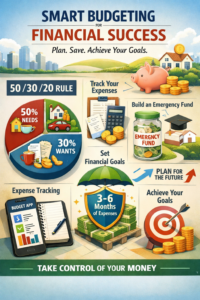
One of the most widely recommended budgeting techniques is the 50/30/20 rule. This method divides income into three categories: needs, wants, and savings. According to this approach, 50 percent of income should be allocated to essential needs such as housing, utilities, groceries, and transportation. These expenses are necessary for maintaining a basic standard of living.
The next 30 percent of income is allocated to personal wants, which include entertainment, dining out, travel, and hobbies. While these expenses are not essential, they contribute to overall lifestyle satisfaction and personal enjoyment. However, maintaining limits on discretionary spending helps prevent financial imbalance.
The remaining 20 percent of income is dedicated to savings and debt repayment. This portion may be used to build emergency funds, invest for retirement, or pay off loans. The 50/30/20 rule provides a simple and practical framework that helps individuals maintain financial balance while still enjoying their income responsibly.
Tracking Expenses and Identifying Spending Patterns
Another important budgeting technique is carefully tracking expenses. Many people underestimate how much they spend each month because small daily purchases often go unnoticed. Recording every expense helps individuals gain a realistic understanding of their spending habits.
Expense tracking can be done using financial apps, spreadsheets, or traditional notebooks. By reviewing these records regularly, individuals can identify patterns and determine which expenses are necessary and which can be reduced. For example, frequent dining out or impulse shopping may significantly impact monthly finances without providing long-term value.
Once spending patterns are identified, individuals can adjust their budgets accordingly. Eliminating unnecessary expenses allows more money to be allocated toward savings or debt reduction. Consistent expense tracking also improves financial awareness and helps individuals stay committed to their budgeting goals.
Creating an Emergency Fund
An emergency fund is a crucial component of responsible financial planning. Unexpected expenses such as medical bills, car repairs, or temporary job loss can disrupt financial stability if there are no savings available. A dedicated emergency fund provides financial protection during such situations.
Financial experts often recommend saving enough money to cover three to six months of living expenses. This amount ensures that individuals can manage essential costs even if their income is temporarily interrupted. Building an emergency fund may take time, but consistent small contributions can gradually create a strong financial safety net.
Keeping emergency funds in easily accessible accounts ensures that money is available when needed. At the same time, it is important to use these funds only for genuine emergencies. Having a reliable emergency fund reduces financial stress and strengthens overall financial resilience.
Setting Realistic Financial Goals
Successful budgeting is closely connected to clear financial goals. Without defined objectives, it can be difficult to stay motivated or measure financial progress. Setting both short-term and long-term goals helps individuals focus their financial efforts and make more strategic decisions.
Short-term goals may include paying off credit card debt, saving for a vacation, or building an emergency fund. Long-term goals often involve larger financial commitments such as purchasing a home, funding children’s education, or planning for retirement. When these goals are clearly defined, individuals can allocate resources more effectively within their budgets.
Breaking large financial goals into smaller steps makes them easier to achieve. For example, saving a specific amount each month can gradually lead to reaching a larger savings target. Goal-oriented budgeting helps individuals remain disciplined and committed to long-term financial success.
Using Technology for Budget Management
Modern financial technology has made budgeting easier and more accessible than ever before. Many digital tools and mobile applications allow users to track expenses, monitor savings, and manage financial goals in real time. These platforms often categorize spending automatically, helping individuals understand their financial behavior quickly.
Budgeting apps also provide reminders for bill payments and savings contributions, reducing the risk of missed payments or overspending. Some platforms offer visual charts and reports that make financial planning more engaging and easier to understand.
In addition, online banking tools allow users to monitor transactions instantly and manage multiple accounts efficiently. By integrating technology into budgeting practices, individuals can maintain better financial control and stay organized. Digital tools can serve as powerful support systems for maintaining consistent financial habits.
Conclusion
Budgeting techniques play a vital role in building strong financial foundations and achieving long-term financial goals. By understanding the importance of budgeting, individuals can gain better control over their income and expenses. Practical strategies such as the 50/30/20 rule, expense tracking, emergency fund creation, and goal setting provide clear guidance for managing money effectively.
Financial planning requires discipline, consistency, and awareness of personal spending habits. With the help of modern financial tools and well-structured budgeting methods, individuals can make informed decisions that support their financial well-being. Over time, these practices lead to greater financial security, reduced stress, and improved confidence in managing money.
Ultimately, budgeting is not about restricting lifestyle choices but about creating balance and ensuring that financial resources are used wisely. By adopting effective budgeting techniques, individuals can move closer to financial independence and enjoy a more stable and secure future.
Read more :zxdyenergy.com
